We are asked to seek connection before we lose someone. That is exactly what NVC teaches: intervene earlier, don't wait until the conflict has escalated.
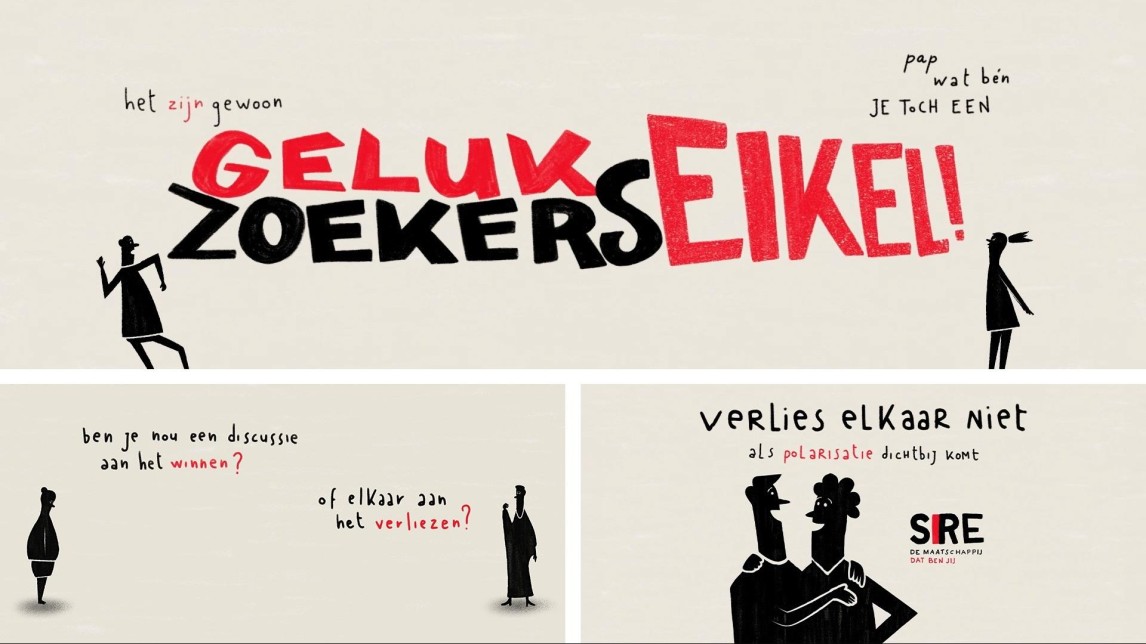
A few years ago the Dutch advertising foundation SIRE launched a campaign with the message: "Don't lose each other." The images were confrontational: families who no longer speak to each other, friendships that ended over a political disagreement, colleagues who avoid each other after one heated argument.
The campaign struck a chord. Because many people recognise it: the increasing polarisation, the hardening of opinions, the difficulty of talking to someone who thinks differently. We do not just disagree any more. We find it harder and harder to even sit at the same table.
What is really happening?
Polarisation is not primarily an intellectual phenomenon. It is an emotional one. People do not disconnect from each other because they have thought carefully and concluded that contact is pointless. They disconnect because they feel unheard, unseen or unsafe.
When we feel threatened in our identity, our values, our way of life, we close ourselves off. That is a natural response. The nervous system takes over, and empathy retreats. We start thinking in terms of us and them. And the other person does the same.
Where NVC comes in
Nonviolent Communication, developed by Marshall Rosenberg, is not a technique for winning arguments. It is a way of listening and speaking that keeps connection alive, even when you disagree.
The core insight: beneath every opinion, position or accusation are needs. Basic human needs for safety, recognition, belonging and fairness. Those needs are universal. Even if the expressed opinion is one you strongly disagree with, the underlying need is often something you understand perfectly well.
When you can hear that need, when you say, "I understand that you want fairness, even if I see it differently", something shifts. The other person no longer feels like your opponent. They feel like a human being.
Earlier, not later
The SIRE campaign says: "Don't lose each other." NVC goes a step further: do not wait until you have almost lost each other. The longer the distance grows, the harder it becomes to bridge. Misunderstandings accumulate. Resentment builds. Patterns solidify.
NVC teaches you to intervene earlier. Not to avoid conflict, since conflict itself is not the problem, but to keep the conversation alive. To say: "I notice something has shifted between us. Can we talk about it?" Before the silence becomes the new normal.
It starts with you
You cannot force someone else to use NVC. But you can choose how you respond. You can choose to be curious instead of reactive. To listen instead of counter-attack. To name what you observe instead of judging what you assume.
That is not always easy. It requires practice, self-awareness and a willingness to be vulnerable. But it is possible. And every conversation in which you manage to stay connected, even with someone who thinks very differently, is a small act of resistance against polarisation.
If you would like to practise this, you are welcome in one of my trainings. We work with real situations, including the difficult ones.
Found this valuable? Share it.
Continue the conversation
Want to apply this theme to your team, organisation or own practice?